
TMJ Dysfunction Explained
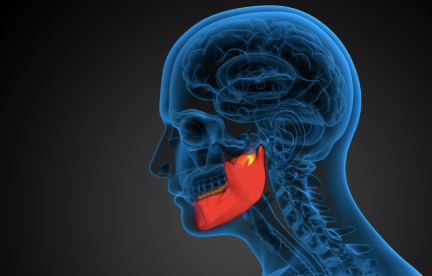
What is “TMJ” and “TMD”?
TMJ stands for Temporomandibular Joint, otherwise known as the jaw. TMD (or TMJD) stands for TMJ Disorder. TMDs are a group of disorders that affect the jaw joint. They typically involve tightness and/or imbalance of the jaw muscles and dysfunction of the jaw joints, which may extend to damage of the joint structures. TMDs can present in many ways from joint clicking, jaw pain, tight muscles, tinnitus, ear pain, craniofacial pain, vertigo, headaches, pain chewing and restricted movement of the jaw.
If you have ever had significant jaw pain, it can be difficult to know who to see. TMDs are typically complex in nature, have causes that are multifactorial and can involve treatment across different professions. This is one reason why there is no unified standard practice in treatment for jaw complaints. Thankfully, there are more health care practitioners now that have focused their care on TMJ dysfunction and can help with getting to the cause(s) of jaw pain. Even better, many different practitioners work together to obtain optimal results for patients with jaw pain.
A large part of TMDs is abnormal joint function and tension and imbalance of the jaw and neck muscles. TMJ focused manual therapists like chiropractors are in a position to help rehabilitate jaw function and reduce pain, as well as identify and treat (within scope of practice) potential causes. What do TMDs look like?
Here is a breakdown of some of the different presentations of jaw pain and an example of treatment.
Common Jaw Presentations
**These descriptions are not a diagnosis. Below are simplified examples of presentations and are not descriptors of real patients. The described symptoms may have other causes than what is indicated in the examples. Multiple of the below presentation can occur in one person simultaneously. Nothing should supplement an individual assessment, as every case is different.
Pain over the jaw on one side, with no other jaw symptoms.
Pain over the jaw in the absence of any assessed dysfunction of the jaw can relate to postural issues and joint dysfunction of the upper cervical spine. In these cases, while the pain is over the jaw from muscle referral and stress on the jaw muscles, the cause stems from changes in the neck function and posture. Treatment is aimed at improving posture and neck joint function and soft tissue therapy to the involved muscles and fascia.
Pain over both jaw joints, mainly in the morning, with or without reduced mouth opening and jaw joint dysfunction.
This is a typical presentation of someone who grinds their teeth at night (sleep bruxism). The jaw muscles are overworked during the night and ache upon waking. Treatment is aimed at reducing tension of the jaw muscles as well as getting to the source of bruxing. Bruxing is most commonly a symptom of airway issues (eg. Sleep disordered breathing). Other causes include stress/anxiety, vitamin deficiencies and some medications. Depending on the cause, treatment for bruxing may involve orofacial myofunctional exercises, exercises to increase parasympathetic drive, myofunctional tools or co-management with an ENT specialist or airway dentist.
Pain over the jaw with reduced (often sudden) mouth opening. This is commonly preceded by joint clicking.
This is commonly one of two presentations.
Particularly when a sudden closed lock follows biting on something hard, this is an increase in inflammation of one of the jaw joints which stimulates muscle spasm of the jaw muscles, most of which act to close the mouth. Spasm of these joints creates restriction in mouth opening.
The other presentation, especially when there has been a past history of joint clicking, is an anterior disc displacement without reduction (ADDwoR). This is when there is a pre-existing forward displacement of the joint disc which has been clicking in to and out of place. When the stress load increases, particularly suddenly when biting on something hard, the disc becomes stuck in the forward position and does not allow full movement on that side. If there is coinciding muscle spasm this can reduce mouth opening to about 2-3 cm.
Initial treatment is aimed at reducing inflammation, reducing muscle spasm, and gentle manoeuvres to unlock and relocate the disc.
Jaw pain with clicking and movement of the lower jaw to one side but returns to the centre with full mouth opening.
This is a classic presentation of an anterior disc displacement with reduction (ADDwR). Stress on the jaw (bruxing, trauma, posture, malocclusion etc) has lead to a forward position of the disc. Upon opening, the jaw swings to the side of the anterior disc (as the jaw on that side is unable to move past the disc). When the jaw clicks (repositioning of the disc), the jaw is able to return to centre on full mouth opening. Sometimes a click will be heard when closing the mouth when the disc dislocates forward again. It should be notes that not all clicking is audible. A TMJ practitioner may use a stethoscope to help assess the presence of a joint click.
In this case, treatment is aimed at jaw muscle release and rehabilitation, manoeuvres to relocate the anterior (forward) disc and addressing any underlying factors that may be putting stress on the jaw like bruxing, posture and occlusion.
Jaw pain with mouth opening to one side that does not return to the centre with full mouth opening.
While this can be purely a muscular imbalance of the jaw muscles, it is often an anterior joint disc that is not relocating back into position (ADDwoR). Treatment is aimed at improving jaw muscles and joint motion as well as underlying factors. However, in this situation, while treatment is aimed at attempting to relocate the disc, capacity for the disc to be able to relocate must be considered. In this case an MRI may be helpful to evaluate the integrity of the joint.
The above descriptions are a very simplified and often do not occur in isolation. Not only can one person present with multiple aspects of TMDs, but it can be complicated by other factors. It is important TMJ complaints are assessed and treated by a practitioner with advanced training in TMJ, airways, jaw development, cervical spinal function and neurology, and the craniofacial complex. It also means, as it crosses different professions, it can be difficult to know who to see when you have jaw pain.
Like with most musculoskeletal complaints, a course of conservative care is often the best place to start. For jaw complaints, this is usually a TMJ specific chiropractor, osteopath or physiotherapist. These practitioners have done more extensive training and address the muscle and joint components of the jaw, as well as looking at the spine and posture. Depending on their training, they can also screen airways, palate development/size and occlusion as well as assess the orofacial complex for myofunctional disorders (such as poor swallow or tongue posture and oral ties) which place stress on the jaw.
In the event where a significant cause of a presenting TMD is a dental, orthodontic or airway issue, the TMJ musculoskeletal practitioner can recommend referral to an appropriate practitioner (eg. ENT specialist, airway or TMJ dentist, orthodontist). With advanced or complex cases, a consultation from a maxillofacial surgeon or oral medicine specialist may be required.