
Why The Jaw Keeps Score
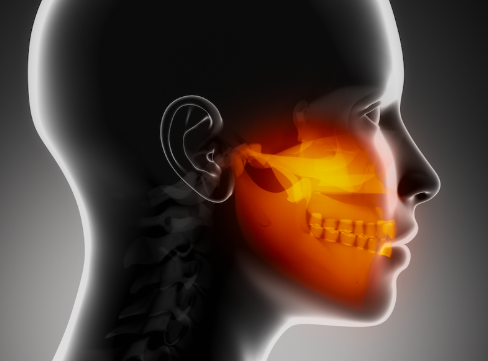
It’s fair to say, that the TMJ (temporomandibular joint), otherwise known as the jaw, is somewhat of an enigma within the healthcare arena. Many people struggle to get answers for their jaw symptoms. Why is the TMJ so difficult to treat and why does it appear to hold so much tension?The key to understanding lies in it’s complex biomechanics (the way it moves), it’s susceptibility to other health issues, and the cross-over into the scope of multiple healthcare professionals.The TMJ is both resilient and vulnerable at the same time. To really understand how this statement can be true, we need to understand the TMJ structure and its place in the body.Excluding the obvious impact of direct trauma to the jaw, what can affect the TMJ?
- Stress and anxiety
- Mouth breathing
- Posture (particularly forward head posture)
- A narrow palate (jaw underdevelopment)
- Some medications (particularly anti-depressants)
- Tight and imbalanced musculature and fascia
- Vitamin deficiencies
- Hormones (Oestrogen)
- Nasal obstruction and allergies
- Tongue and orofacial function
- Tongue ties
- Sleeping habits
- Dentition/occlusion
- Sleep disordered breathing/airway resistance
- The central nervous system
- Possibly parasites (research is inconclusive)
- Pelvic floor muscles
At first glance, this may seem like a lot…that finding the cause of jaw issues is hopeless. However, connecting the dots on how the above affect the jaw and its biomechanics makes the enigma an illusion.
The structure of the TMJ is built for force. It has a strong fibrocartilage designed for the forces of chewing. However, we must remember two important unique differences with the TMJ compared to other joints of the body:
1. The left and the right joints must move in sync for there to be harmony and optimal function.
2. The joint cushioning is mobile. It moves forward with the lower jaw when the mouth opens. The more moving parts, the greater the opportunity for dysfunction.
For these reasons, the jaw does not cope well with prolonged excess or uneven pressure.
What are some of the causes of pressure on the TMJs?
Stress
For a long time, jaw problems were blamed solely on stress. While some have now gone the other way and claim that stress is not a cause of TMJ dysfunction or pain, there are plenty of research papers that support that, in fact, stress is a significant factor…it’s just not the only factor.
How does stress correlate to jaw tension? When we are stressed, multiple things change. Our posture becomes slumped, muscles become tense, our shoulders elevate, and some people clench their jaw. Rounded shoulders and forward head posture lead to neck and jaw changes, loading these areas.
A change in body chemistry when we are stressed impacts the central nervous system which can lead to nocturnal bruxism (tooth grinding at night). Prolonged grinding increases the work of the jaw muscles, creating excess contraction of these muscles, decreased blood flow, fatigue and pain. Increased work of the jaw can also lead to morphological changes in the lateral pterygoid muscle which has a correlation with disc displacement.
A slumped posture and forward head position directly impacts the tension of the muscles below the lower jaw (suprahyoid muscles) and can place an influencing force on the lower jaw in a backwards direction. This can create difficulty in swallowing and tongue movement, as well as diaphragmatic breathing, all placing extra stress on the jaw. Tightness in the suprahyoid muscles can lead to an open mouth posture at night, placing further stress on the TMJs.
Breathing
How you breathe can have a huge impact on the jaw. A lack of diaphragmatic breathing and an increase in the use of the accessory breathing muscles like the sternocleidomastoid and scalene muscles, can create a forward head posture. The resulting change in the head and neck position can have a direct impact on the hyoid bone and muscles, jaw function and tongue position and function. This can affect the biomechanics of the TMJs.
Nasal resistance, pharyngeal airway size and nocturnal mouth breathing can place direct physical stress on the jaw via a frequent open mouth posture, as well as indirect physical stress via bruxism (grinding). Bruxism is a known outcome of sleep disordered breathing. The mechanism is still somewhat unclear, thought to be a reaction of inadequate O2/CO2 levels, creating a nervous system response, or the body’s attempt to shift the lower jaw to open the airway. Persistent clenching or grinding overworks the jaw and can create excess pressure and imbalance on the TMJs.
Tongue/Oral Function
Poor tongue function means the jaw will often “help out” and compensate. This can place increased pressure on the jaw. Poor tongue function can develop as a consequence of a tongue tie, skeletal underdevelopment of the jaw, and altered or under use of the jaw muscles or imbalances of the orofacial muscles. This can occur in circumstances such as exclusive infant bottle feeding, excessive pacifier use, and lack of chewing.
A tongue that has not been able to function well may have poor tone and position within the oral cavity. If the tongue rests too far back in the mouth, there is an increased risk of airway occlusion at night when muscles relax, particularly when sleeping on your back. This increases the chances of bruxism and stress to the TMJs.
Hormones
There is a strong link with oestrogen levels and the TMJ, inflammation levels, and bone loss. There is a higher incidence of TMDs (temporomandibular joint disorders) in women, which may be related to the difference in oestrogen levels in men and women.
The exact role of oestrogen in the pathophysiology of the TMJs is still not completely understood, however there is research to suggest oestrogen plays a role in bone loss and cartilage production where there is increased stress on the TMJs.
There is also evidence to suggest the complexity of oestrogen and the TMJs may extend to differences in genetics of the oestrogen receptors in the TMJs.
Jaw Development
The way the jaw develops has an impact on the position of the lower jaw and how the TMJ functions. It also impacts the space for the tongue, tongue and other orofacial muscle function and the tongue position and the potential impact on the airway.
Underdevelopment of the jaw, which appears to be a common occurrence for many reasons, means the upper jaw can be narrow and deficient which impacts the size of the nasal airway, the space for the tongue, space for the teeth and how the lower jaw grows, which can affect the airway. Reduced forward growth of the upper jaw often means the lower jaw is prohibited from growing forward and gets trapped, forcing the growth down and backwards. This alters the position of the lower jaw bone in the joint in relation to the bite, potentially altering joint pressure and function, as well as altering pressure on teeth and their periodontal ligaments.
Vitamin Deficiencies
In development, lack of vitamins may influence the growth of the jaw, leading to jaw underdevelopment. Deficiencies in some vitamins and nutrient have also been linked to grinding of the teeth, particularly vitamin D, calcium and iron.
Other factors to consider are oral/parafunctional habits like nail biting, favouring chewing on one side, sleeping with your hand directly under your face, daytime clenching, occlusion (your bite), craniofacial asymmetry, hypermobility and associated disorders, ankyloglossia (tongue tie) and spinal function (particularly of the neck).
Ultimately, thorough examination for all the above factors, and restoring good TMJ biomechanics is the key to successful treatment.
While one TMJ practitioner cannot diagnose and treat all factors affecting the TMJ, they can assess you for them and refer accordingly. TMJ treatment often requires collaboration and teamwork.
References
Alkhatatbeh MJ, Hmoud ZL, Abdul-Razzak KK, Alem EM. Self-reported sleep bruxism is associated with vitamin D deficiency and low dietary calcium intake: a case-control study. BMC Oral Health. 2021 Jan 7;21(1):21.
Allaf BAW, Abdul-Hak M. Association between bruxism severity and serum concentrations of 25-hydroxyvitamin D levels. Clin Exp Dent Res. 2022 Aug;8(4):827-835.
Beckmann A, Peroz I, Peroz S. Anatomical versus functional classification of ankyloglossia and their association with temporomandibular joint disorders in adults: a cross sectional study. J Oral Facial Pain Headache. 2025 Sep;39(3):77-83.
Küchler EC, Meger MN, Ayumi Omori M, Gerber JT, Carneiro Martins Neto E, Silva Machado NCD, Cavalcante RC, Teixeira LR, Stuani MB, Nelson Filho P, da Costa DJ, Souza JF, Brancher JA, León JE, Scariot R. Association between oestrogen receptors and female temporomandibular disorders. Acta Odontol Scand. 2020 Apr;78(3):181-188.
Ma H, Teng H, Li A, Zhang Z, Zheng T, Chong DYR, Shao B, Liu Z. The pressure in the temporomandibular joint in the patients with maxillofacial deformities. J Stomatol Oral Maxillofac Surg. 2023 Feb;124(1S):101285.
Okeson, J. Management of Temporomandibular Disorders and Occlusion, 6th Ed.
Peres KG, Cascaes AM, Peres MA, Demarco FF, Santos IS, Matijasevich A, Barros AJ. Exclusive Breastfeeding and Risk of Dental Malocclusion. Pediatrics. 2015 Jul;136(1):e60-7.
Storari M, Serri M, Aprile M, Denotti G, Viscuso D. Bruxism in children: What do we know? Narrative Review of the current evidence. Eur J Paediatr Dent. 2023 Sep 1;24(3):207-210.
Tomura T, Ishii T, Kasahara N, Nishii Y. Dihydrotestosterone and 17β-estradiol modulate TMJ osteoarthritis development and reveal sex-specific differences in pathogenesis. Sci Rep. 2025 May 28;15(1):18740.
Tsuchida J, Nakao Y, Sato K, Uehara O, Mizoguchi I, Abiko Y, Iijima M. Effects of estrogen and mechanical loading on cultured cells derived from mandibular condylar cartilage. Sci Rep. 2025 Jul 2;15(1):23470.
Vlăduțu D, Popescu SM, Mercuț R, Ionescu M, Scrieciu M, Glodeanu AD, Stănuși A, Rîcă AM, Mercuț V. Associations between Bruxism, Stress, and Manifestations of Temporomandibular Disorder in Young Students. Int J Environ Res Public Health. 2022 Apr 29;19(9).
Wang S, Chen Y, She D, Xing Z, Guo W, Wang F, Huang H, Huang N, Cao D. Evaluation of lateral pterygoid muscle in patients with temporomandibular joint anterior disk displacement using T1-weighted Dixon sequence: a retrospective study. BMC Musculoskelet Disord. 2022 Feb 8;23(1):125.
Williamson EH, Hall JT, Zwemer JD. Swallowing patterns in human subjects with and without temporomandibular dysfunction. Am J Orthod Dentofacial Orthop. 1990 Dec;98(6):507-11.
Yan ZB, Wan YD, Xiao CQ, Li YQ, Zhang YY, An Y, Xiong X. Craniofacial Morphology of Orthodontic Patients with and without Temporomandibular Disorders: A Cross-Sectional Study. Pain Res Manag. 2022 Mar 22;2022:9344028.